
Ayurveda & Yoga Therapy
Ancient wisdom.
Everyday practice.
Ayurveda and yoga invite us to pay closer attention to the way we live — how we eat, move, breathe, rest, relate and respond to the world around us.
In my work, these traditions bring a personal, practical and reflective dimension to health and wellbeing.
Body · Breath · Awareness
The Ayurvedic perspective
A way of living
with awareness.
Ayurveda is a traditional Indian system of health and wellbeing with roots in the Vedic tradition. It views the person through the relationships between body, mind, daily life and a sense of inner balance.
Its perspective places everyday habits at the centre of the conversation: nourishment, digestion, sleep, movement, daily rhythms, environment, relationships and emotional experience.
Rather than expecting the same routine to suit everyone, Ayurveda begins with individual differences. This encourages observation, self-understanding and choices that respond to the person and their circumstances.
Constitution & individual differences
Different qualities.
One whole person.
Ayurveda describes individual constitution through three doshas: Vata, Pitta and Kapha. Each person is understood to express a different combination of their qualities.
These are concepts within a traditional framework for reflection and lifestyle education, rather than medical diagnoses.
Air & space
Vata
Movement
A traditional description of movement, change and the qualities of lightness and variability.
Fire & water
Pitta
Transformation
A traditional description of transformation, intensity and the qualities of warmth and focus.
Water & earth
Kapha
Stability
A traditional description of structure, steadiness and the qualities of cohesion and support.
Constitution is a starting point for curiosity, not a fixed identity. Your habits, environment, relationships and changing circumstances remain part of the picture.
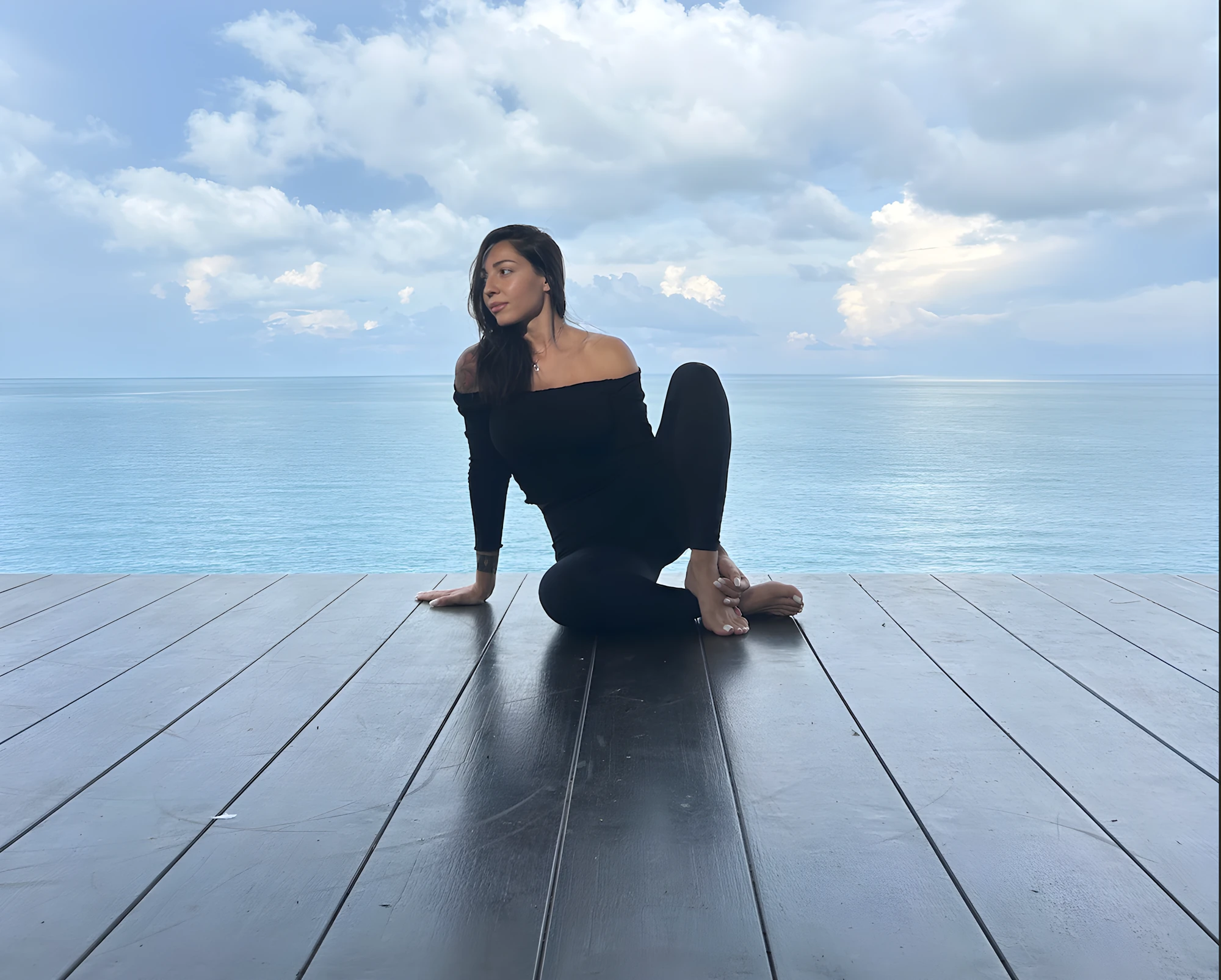
Mariela Dobreva
Yoga beyond the posture
The practice
goes deeper.
Yoga is more than physical postures. It brings movement, breath, attention, behavior and self-inquiry into one practice.
Asana can help us explore how we move and experience the body. Pranayama brings attention to the breath. Meditation creates space to observe the mind and the patterns through which we respond to life.
Together, these practices offer ways to cultivate awareness and a more intentional relationship with ourselves.
A personal practice
Move with attention.
Breathe with awareness.
Movement
Explore mobility, strength, balance and body awareness through practices adapted to your experience, abilities and circumstances.
Breath
Make space to notice breathing patterns and develop a more attentive relationship with the breath.
Inner awareness
Learn to recognise the body’s internal signals and observe thoughts, emotions and familiar reactions with greater curiosity.
Practice is individual. We work within your abilities and circumstances, with appropriate guidance and respect for any medical advice you have received.
Meaning & self-inquiry
From familiar
reactions to
conscious choices.
Yoga also carries a spiritual dimension: an invitation to inquire into who we are beyond familiar roles, expectations and conditioned ways of thinking.
Ayurveda and yoga can make room for questions of purpose, inner alignment and the way we relate to life. In ALTR™, these reflections sit alongside practical lifestyle choices, shaped around the individual.
Your next step
A practice shaped
around your life.
We begin with where you are now, the daily patterns you want to understand and the changes you would like to explore.
Online via Zoom · Individually arranged